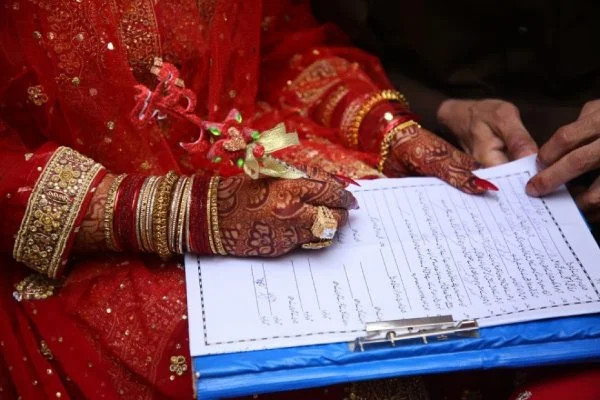
Consultation for Court Marriage
Planning a court marriage involves more than just submitting an application. Understanding the legal requirements, preparing the correct documents, and following the prescribed procedure are essential for completing the process smoothly.
At Legal Advice Kart, we provide professional legal consultation to help couples understand the court marriage process and the applicable legal requirements. Our legal experts guide you through every stage, including document verification, eligibility assessment, application preparation, and compliance with the relevant laws.
Whether you belong to the same religion, different religions, different castes, or one of the parties is an NRI or foreign national (subject to applicable laws), our team assists you with reliable legal guidance while maintaining complete confidentiality throughout the process.
Court Marriage Takes Time
Court marriage is a legal process and cannot usually be completed in a single day. After the required notice is submitted, the Marriage Officer follows the procedure prescribed under the applicable law. Certain waiting periods and legal formalities may apply before the marriage can be solemnized.
Seeking professional legal assistance helps reduce documentation errors, avoids unnecessary delays, and ensures that all legal requirements are fulfilled correctly.
Importance of Witnesses
Witnesses play an important role in the court marriage process. Under the applicable legal provisions, the marriage is solemnized in the presence of the required number of witnesses, who confirm that the marriage has taken place voluntarily and in accordance with the law.
Witnesses should carry valid identity proof and any other documents required by the Marriage Officer on the day of registration.
Who Can Become a Witness?
Generally, any eligible adult who possesses valid identity documents and is willing to witness the marriage may act as a witness, subject to the applicable legal requirements.
Before agreeing to become a witness, it is advisable to ensure that both parties fulfil the legal eligibility conditions for marriage and that all information provided during the registration process is accurate. Since witnesses become part of the official legal record, they may be required to verify the facts if any legal issue arises in the future.
Court Marriage in India
Court marriage is a legally recognized marriage performed before the Marriage Officer under the applicable provisions of Indian law. Once all legal formalities are completed, the Marriage Officer issues a Marriage Certificate, which serves as official proof of marriage for various legal and administrative purposes.
Court marriage offers a simple, transparent, and legally valid alternative to traditional ceremonies and is available to eligible couples irrespective of religion, caste, or community, subject to the applicable legal provisions.
When is Court Marriage a Suitable Option?
Court marriage is commonly preferred in situations such as:
- Couples belonging to different religions or communities.
- Inter-caste marriages.
- Couples seeking a simple and legally recognized marriage.
- Individuals who prefer a straightforward legal procedure.
- Cases involving NRI or foreign nationals, subject to applicable legal requirements.
Eligibility Criteria for Court Marriage
To register a court marriage in India, the following conditions are generally required:
- The bride must have attained 18 years of age.
- The groom must have attained 21 years of age.
- Neither party should have a living spouse at the time of marriage.
- Both parties must give their free and voluntary consent.
- Both individuals should be mentally competent to enter into a valid marriage.
- The parties should not fall within the prohibited degrees of relationship unless permitted by law.